tolerate a wide range of moisture levels and are adapted to stay near the surface of near-liquid waste. Depending on temperatures and environmental conditions
to 0.25 mm) and yellowish white in colour. They are laid on the ground surface close to plant roots. The larvae can grow to 5 to 12 mm in length and 0
deposited singly or in pairs throughout the crop, on the lower and upper surfaces of leaves. The caterpillar passes through 6 instars. It has a green head
long, elongated, with a dark longitudinal stripe running along the dorsal surface. In green individuals, this stripe is dark green, while in pink specimens
visible damage through feeding, and some larvae can also be seen on the surface. However, they usually hide within the organelle, leaving an entry hole
are about 0.5 mm in size. Predatory mites are usually found on the lower surface of the leaves, often in the corner of the main vein and lateral veins. It
larvae remain hanging on the leaf and pupate there, sometimes on the upper surface but more commonly on the underside. The late third instar larva, that emerges
brown with lateral stripes that are sometimes light in colour. The ventral surface is lighter than the dorsal, with hairs located in warty spots that are lighter
Damage symptoms Thrips cause damage to plants by piercing the cells of the surface tissues and sucking out their contents, causing the surrounding tissue to
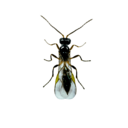
https://flic.kr/p/2cbcyHd *** Source: Gilles San Martin | Link: https://flic.kr/p/9hrY3V Mushroom industry Pest Sciarids Lycoriella castanescens Larva Adult