Use Artefeed as an alternative source of food for maintenance of Macrolophus pygmaeus in tomatoes at low prey densities. Mode of action As Macrolophus pygmaeus needs a continuous food source to mainta
For monitoring whiteflies, thrips , leaf miner and fungus gnats in hot spots or places where high pressure can be expected, such as along gables, ventilation windows and (other) draughty places. Pests
Pests Eggs, larvae and pupae of sciarid flies ; thrips pupae. Mode of action The predatory mites feed on larvae of sciarid flies , thrips pupae and other soil-dwelling insects. The mites appear in and
Use the Natutec Mini-Airbug for the distribution of natural enemies in the crop. The Mini-Airbug can be used for full-field distribution, specific hot spots as well as for the distribution of Artefeed
Use the Natutec Airobug for the distribution of natural enemies in the crop. The Airobug can be used for large surfaces and full field distribution in high-tech greenhouses with internal transport sys
Use the Natutec Airbug for the distribution of natural enemies in the crop. The Airbug can be used for both full-field distribution and for specific hot spots. Mode of action The innovative combinatio
Use Horiver Wetstick for monitoring of different flying insects. Pests Yellow: whitefly , thrips , fungus gnats, leaf miners Blue: thrips Black: Tuta absoluta Red: Drosophila suzukii White: Lygus spp.
Pests Two spotted spider mite ( Tetranychus urticae ); European red mite ( Panonychus ulmi ); citrus red mite ( Panonychus citri ); other spider mite species. Crops Do not use in tomato. Mode of actio
Pests Young larvae of various thrips species. Crops Do not use in tomato. Mode of action Predatory mites use their piercing mouthparts to extract the contents of their prey. Pack size 50,000 predatory
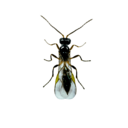
Pests Greenhouse whitefly ( Trialeurodes vaporariorum ); Tobacco whitefly ( Bemisia tabaci ). Mode of action Adult female parasitic wasps parasitize the third and fourth larval stage of the whitefly .