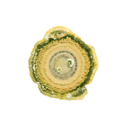
and Alternaria dauci . Cercospora prefers younger leaves. A. dauci starts mainly along the leaf edges. Rhexocercosporidium infection can cause loss of seedlings
soil-dwelling organisms. The larvae do not feed. Nymphs and adults prey mainly in the upper 1-2 cm of the soil. Adult females consume up to 4.5 thrips
stem. Gerbera flowers deform and discolour with the leaves turning bronze, mainly along the midrib. Even a mild infestation can cause enormous damage, and
spreading. This gum blocks the xylem and causes the wilting which is the main symptom of this Fusarium species. Higher up in the plant, the microconidia
flowers Bumblebees are much more efficient pollinators than honeybees, they mainly forage for pollen rather than nectar, and transfer more pollen to the pistils
by the presence of leaf hairs. The larvae are not easily observed and are mainly active at night, sheltering under the plant or the rim of the pot, during
foliage, stunting, and in extreme cases eventual defoliation. However, it is mainly the great quantity of honey-dew that causes the damage because of the sooty
and body are dark, metallic green, with darker copper-green legs. Larvae (mainly third-instar) overwinter in an earthen cell about 15-20 cm deep in the soil
beneficial nematodes Beneficial nematodes or entomopathogenic nematodes are mainly known for the biological control of soil pests such as thrips pupae, and
noticeable once the plants are in the hall. Fantastic results with Swirski-LD The main pests are the Western flower thrips , aphids (predominantly peach potato