Pests Young larvae of various thrips species. Crops Do not use in tomato. Mode of action Predatory mites use their piercing mouthparts to extract the contents of their prey. Pack size 50,000 predatory
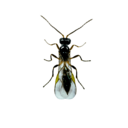
Pests House fly ( Musca domestica ), biting stable flies ( Stomoxys spp.), lesser house fly ( Fannia canicularis ) and other Fannia spp. Mode of action When the adult parasitic wasps emerge from the p
Pests Two-spotted spider mite ( Tetranychus urticae ) and other Tetranychus spp., except Tetranychus evansi . Mode of action Predatory mites use their piercing mouthparts to extract the contents of th
General Since the start of its invasion in 2008/2009, the spotted wing drosophila, which is originally from Asia, has spread extensively in North and South America and Europe where it has caused sever
General The cabbage leafroller (Clepsis spectrana) is native to North-West Europe. It is a highly polyphagous species causing damage to field grown cabbage, apple, pear as well as maple, popular, spru
General The mottled arum aphid, Neomyzus circumflexus , has a cosmopolitan distribution and a wide host range. In temperate climates it is primarily a pest in greenhouses where it attacks many ornamen
Pests Two-spotted spider mite ( Tetranychus urticae ); european red mite ( Panonychus ulmi ); citrus red mite ( Panonychus citri ); other spider mite species. Crops Do not use in tomato. Mode of actio
General The lygus bug (or tarnished plant bug) is native to North America, and it is especially common across the eastern half of the continent, from northern Canada to southern Mexico. It is one of t
General The western corn rootworm ( Diabrotica virgifera virgifera ) is a chrysomelid beetle originating from North America, where it is regarded as the main pest of maize. Nowadays it is present in m
General The yellow rose aphid , Rhodobium porosum , is probably of North American origin but is now widely distributed in Europe, North Africa, parts of Asia and South America. It attacks plants of th