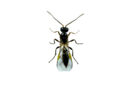
General The yellow rose aphid , Rhodobium porosum , is probably of North American origin but is now widely distributed in Europe, North Africa, parts of Asia and South America. It attacks plants of th
General Larvae of the flies Lyprauta cambria, Proceroplatus trinidadensis and Lyprauta chacoensis (family Keroplatidae) have been associated with root damage in potted orchids, especially in greenhous
General The diamond back moth (Plutella xylostella) belongs to the family of Plutellidae . It only attacks Brassicaceae species, including cruciferous weeds. The diamond back moth (Plutella xylostella
mask or a NIOSH approved respirator with any N, R, P or HE filter for biological products. Eyes and Face: Chemical safety goggles or safety glasses with
General Houseflies are a well-known pest of farm and home. Believed to have originated in central Asia, the insect expanded its range worldwide long ago as a commensal organism to human populations; t
General The citrus mealybug ( Planococcus citri ) has a world-wide distribution and many and diverse host plants. In temperate regions of the world this mealybug poses a problem in greenhouse horticul
General The shallot aphid, Myzus ascalonicus , is extremely polyphagous. It feeds on crops such as onions, shallots, strawberries, lettuce, brassicas and potatoes and many ornamentals . The shallot ap
General The rose aphid, Macrosiphum rosae , is a serious and often abundant pest of roses. It is virtually cosmopolitan and widely spread in Europe. Damage symptoms Infestations with rose aphids retar
General The Japanese beetle, Popillia japonica , originates from north-eastern Asia. It was first observed in the US more than 100 years ago. Although not a pest in Japan, extensive turf, and a lack o