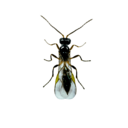
marks on each wing, the more proximal pair almost forming a “V” when at rest. At rest, the wings are held folded almost horizontally over the body. The antennae
which have flattened bodies and fold their wings flat over their body when at rest. The wings overlap each other exposing the scutellum, a prominent triangular
appears to be divided into two parts: the head with the mouthparts, and the rest of the body. All mobile stages have only two pairs of legs, whereas other
microorganisms and is therefore not a real fungus. It survives as oospores, resting spores which are resistant to unfavourable conditions, especially dehydration
other. The hindwings are brown. The body is brown and hairy and, when at rest, the hairy dorsal plume is characteristically distinct. The antennae are
an oval shape. The first instar larvae (crawlers) are mobile, whereas the rest of the larvae stadia remain flattened on the leaf. The fourth larva stadium
are opaque white and have only three pairs of legs. They develop into the resting stage (pharate nymph). This is a transitional stage between larva and adult
white markings on their wings. The wings lie flat over their backs when at rest, displaying a characteristic black and white pattern. Adults are active predators
that protrude from the front of the head. Additionally, Stomoxys flies will rest on surfaces in a characteristic head-upward position. Like the house fly