situation. Environmental conditions Steinernema carpocapsae is active between 14-34°C/57-93°F but performs best at temperatures between 19-31°C/66-88°F Soil or [...] Pesticides can have (in)direct effects on biological solutions As a general rule for tank mixing, always add the nematodes to a fully filled tank containing
Cookie Statement We may update our Cookie Statement from time to time, as the rules on cookies may change or new features may be added to our website. Updates
soft scale The scale of the female is flat, usually an elongated oval shape, 3-4 mm long, yellow-green or light grey in colour, with dark brown speckles or
Commercially reared bumblebee species will forage at temperatures as low as 3-4C (37-39F) and will reliably pollinate crops starting around 10C (50F). For [...] Spacing: Though bumblebees will forage and pollinate at temperatures as low as 3-4C (37-39F), they tend to stay within 100m of the colony at these low temperatures
the local rules and the instructions in this document. If the local rules do not agree with the instructions in this document, the local rules will apply [...] ............. 34 9.9.1 Spidex / Spidex Vital......................................................................................... 34 9.9.2 Anso-Mite [...] ................34 9.9.3 Chrysopa L / Cryptobug L................................................................................. 34 9.9.4 Spical / Thripex
potential to develop into a game changer in spider mite control. It changes the rules of the game and is even more in control of spider mites . And the grower
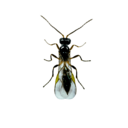
nectar and water. Life cycle and appearance of Aphidius matricariae Adults are 3-4 mm golden brown wasps with long antennae. Characteristic for the distinction
optimal effectiveness combine with an adjuvant such as Addit or Squad Mix with 3-4 litres of water (15-20°C) per 500 gram of Mycotal and stir into a slurry Fill
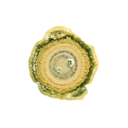
conditions. Trichoderma harzianum T-22 grows in a wide temperature range (10-34°C/50-93°F), at a pH between 4 and 8, in many types of cultivation media and
water. The pH for growth, sporulation, and spore germination ranges from 3.4 to 7.1 (optimum 4.2–4.7). This affinity for acidic conditions may explain