Sjaak van Dijk’s father was already using the predatory mite Phytoseiulus persimilis and Sjaak himself has always used it. However, Sjaak recently made the switch to Spidex Vital . His initial experie
Whitefly is and remains a pernicious pest for growers of tomatoes and other crops. This is further aggravated by the fact that there are almost no effective chemical products that slot neatly into a b
Floricultura is a big name in the international orchid market. The company produces young plants of the Phalaenopsis, Cymbidium, Cambria, and Miltonia varieties. ‘These form the starting material for
Benefits of parasitic wasps Using parasitic wasps for pest control offers a range of benefits: Enhanced crop protection : Parasitic wasps are highly efficient at targeting specific pest insects. By in
What are beneficial microorganisms? Beneficial microorganisms, also known as beneficial microbes, are microorganisms that provide positive effects to their environment, including various biological sy
Effective pollinators Bumblebees are known to be easy, efficient and reliable pollinators. These are the benefits of bumblebees: Bumblebees provide maximum insurance for optimal pollination , due to t
Every day, Koppert helps growers and farmers around the world to combat pests and diseases in a natural and sustainable way. In this way, we hope to make an active contribution to a sustainable societ
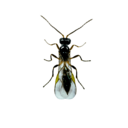
Pests Potato psyllid ( Bactericera cockerelli ). Mode of action Adult female parasitic wasps parasitize nymphs of the fourth and fifth instar of psyllid. Additionaly, host feeding also occurs. Appeara
Pests Greenhouse whitefly ( Trialeurodes vaporariorum ); Tobacco whitefly ( Bemisia tabaci ). Mode of action Adult female parasitic wasps parasitize second to fourth stage larvae of the whitefly . Hos
Pests Two-spotted spider mite ( Tetranychus urticae ) and other Tetranychus spp., except Tetranychus evansi . Mode of action Predatory mites multiply in the sachet and disperse into the crop over a pe