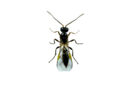
General Shore flies ( Scatella tenuicosta ) occur very commonly, often in the vicinity of water. They feed on algae. Other shore fly species have diverse feeding habits but the larvae of most species
Use Horiver Drystick for trapping and monitoring different flying insects. The traps work particularly well for bugs such as Lygus spp. and Nesidiocoris tenuis. Pests Yellow: Whitefly , Nesidiocoris t
Lurem-TR increases the attraction of thrips to blue and yellow sticky traps and thus ensures earlier discovery of the pest. Pests Several thrips species, such as Frankliniella occidentalis and Thrips
the same day with other products without notice from Abnatura. Test the effect on a small number of samples before use. Results may vary from one site
Even more impact on spider mite control! It all started with Spidex ( Phytoseiulus persimilis ) at Koppert more than 50 years ago. From day one this predatory mite formed the foundation of our spider
Use the Deltatrap for monitoring and trapping male moths and mealybugs in protected and outdoor crops in combination with a species-specific pheromone. Pests Moths and mealybugs . Crops Protected and
Use Horiver Wetstick for trapping and monitoring of different flying insects. Pests Yellow: whitefly , thrips , fungus gnats, leaf miners Blue: thrips Black: Tuta absoluta Red: Drosophila suzukii Whit
year, bumblebees have trouble finding their way back to the hive. For effective orientation they need at least 28 Watt/m2 PAR-light or 56 Watt/m2 sunlight [...] activity of bumblebees. Specially when they block the early sunlight, the effect is worse. Energy saving screens are often used in greenhouses during winter
at times at which there is enough natural light for them to navigate effectively. This improves the pollination results and the development and lifetime