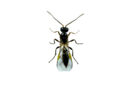
General The mottled arum aphid, Neomyzus circumflexus , has a cosmopolitan distribution and a wide host range. In temperate climates it is primarily a pest in greenhouses where it attacks many ornamen
General Although it was first described in 1860, the cannabis aphid ( Phorodon cannabis ; a.k.a. bhang aphid or hemp aphid) is a very new pest to North America. It was first seen on cuttings originati
General The cabbage moth (Mamestra brassicae) is a highly polyphagous defoliator. Besides being a major cabbage pest, it feeds on 70 plants of 22 families, among them crops such as sweet pepper, tomat
General The tobacco whitefly ( Bemisia tabaci ) belongs to the family Aleyrodidae , and the sub-family Aleyrodinae . This insect was first identified on tobacco in Greece in 1889, hence the name tabac
General The diamond back moth (Plutella xylostella) belongs to the family of Plutellidae . It only attacks Brassicaceae species, including cruciferous weeds. The diamond back moth (Plutella xylostella
General The yellow rose aphid , Rhodobium porosum , is probably of North American origin but is now widely distributed in Europe, North Africa, parts of Asia and South America. It attacks plants of th
General As the name implies, the European red mite, Panonychus ulmi , is mainly a pest of fruit trees (apple, pear, plum and cherry). However, it can attack a large scale of other woody plants and is
General Larvae of the flies Lyprauta cambria, Proceroplatus trinidadensis and Lyprauta chacoensis (family Keroplatidae) have been associated with root damage in potted orchids, especially in greenhous
information available. SECTION 10: Stability and reactivity Reactivity Biological stability Possibility of hazardous reactions Conditions to avoid Incompatible