distribution and a wide host range. In temperate climates it is primarily a pest in greenhouses where it attacks many ornamentals , including chrysanthemums
is very common in tropical and sub-tropical regions and is also a common pest in greenhouses throughout the world. C. hesperidum has many host plants,
Biological control of thrips Thrips are among the most challenging pests in greenhouse and field crops. Their feeding and virus transmission cause leaf [...] solutions for thrips, professional growers can achieve reliable, sustainable pest management while protecting crop quality and productivity. Solutions for [...] the sachets enable a continuous supply of predatory mites even before the pest is present. Thrips control videos Take a look at the video or go to our Youtube
product is not registered for the control of pests in aquatic systems, DO NOT use to control aquatic pests. - DO NOT contaminate irrigation or drinking [...] application. COMPATIBILITY In some cases, tank mixing a pest control product with another pest control product or a fertilizer can result in biological [...] NOTICE TO USER: This pest control product is to be used only in accordance with the directions on the label. It is an offence under the Pest Control Products
of the nematodes produced by Koppert has been selected to target specific pest insects. How does it work? After application, the nematodes set out in search [...] the digested tissues of the dead insect and reproduce in large numbers. The pest insect stops feeding soon after being infested, and dies within a few days
Aphis nasturtii , has a nearly cosmopolitan distribution and is a major pest of potatoes, where it also transmits viruses. It also attacks a large number
General Trichoplusia is not only a damaging pest in crucifers, their favourite host, it can also be found in crops such as tomato, pepper, some cucurbits
As the name implies, the European red mite, Panonychus ulmi , is mainly a pest of fruit trees (apple, pear, plum and cherry). However, it can attack a large
fabae , is widespread in temperate regions, where it is a serious economic pest of beans. It is highly polyphagous, and attacks a wide range of other crops
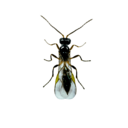
Pests Leaf miners ( Lyriomyza spp.). Mode of action Adult female parasitic wasps of Diglyphus isaea kill second and third instar leaf miner larvae in the