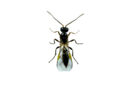
xylostella) is suggested to have its origin in Europe, South Africa or East Asia, but is now present wherever its cruciferous hosts exist and it is considered to
white, cottony hairs and scales from the moth’s body. The eggs, usually grey but sometimes greenish or pinkish, are laid at night, preferably low in the crop
base of plant stems. The reduction of the infestation level occurs at a slow but steady rate. Feeding behaviour of Stratiolaelaps scimitus Predatory mites
for school? If so, you can find a lot of information at www.koppert.ca , but if there is something specific you are looking for, you can reach out to
found an ally in Koppert that not only has the highest quality products, but also accompanied them in this transition. "The experience with the use of
reducing whitefly infestations. Adults of this species do not feed on whiteflies but instead rely on nectar and honeydew for nourishment. Life cycle and appearance
the following pests: Aphids Adalia bipunctata feeds on all aphid species, but the product Aphidalia is especially designed for the control of aphids in
closely resembles the greenhouse whitefly ( Trialeurodes vaporariorum ), but is slightly smaller and yellower. More distinctively, the wings of the tobacco
Steinernema feltiae Steinernema feltiae is active between 10-31°C/50-88°F but performs best at temperatures between 14-26°C/57-79°F Soil or air temperature
nematodes Heterorhabditis bacteriophora is active between 16-35°C/61-95°F but performs best at temperatures between 19-33°C/66-91°F Soil temperature below