
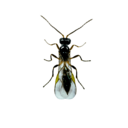




General Cutworms ( Agrotis spp.) are occurring worldwide. Important species are for instance the black cutworm Agrotis ipsilon and the turnip moth Agrotis segetum . The larvae of these moths usually f
General Click beetles are elongate beetles with a hard exoskeleton, with the head deeply retracted into the thorax. When disturbed they lie on their back feigning death and then suddenly propel themse
General The chafers are beetles of the Scarabaeidae family. The larvae of both species live in the soil and feed on the roots of many plants. They are a serious pest that can cause substantial damage.
General Since the start of its invasion in 2008/2009, the spotted wing drosophila, which is originally from Asia, has spread extensively in North and South America and Europe where it has caused sever
General The cabbage leafroller (Clepsis spectrana) is native to North-West Europe. It is a highly polyphagous species causing damage to field grown cabbage, apple, pear as well as maple, popular, spru
General The diamond back moth (Plutella xylostella) belongs to the family of Plutellidae . It only attacks Brassicaceae species, including cruciferous weeds. The diamond back moth (Plutella xylostella
General Shore flies ( Scatella tenuicosta ) occur very commonly, often in the vicinity of water. They feed on algae. Other shore fly species have diverse feeding habits but the larvae of most species
General The black vine weevil, Otiorhynchus sulcatus, is a pest in many ornamental crops (e.g. rhododendron, cyclamen and azalea), as well as in strawberries and other fruit crops in both temperate an
General The black bean aphid, Aphis fabae , is widespread in temperate regions, where it is a serious economic pest of beans. It is highly polyphagous, and attacks a wide range of other crops. Damage
General The American serpentine leaf miner ( Liriomyza trifolii ) originates from North America, but occurs also in Europe since about 1976. The American serpentine leaf miner ( Liriomyza trifolii ) i