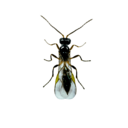
General The diamond back moth (Plutella xylostella) belongs to the family of Plutellidae . It only attacks Brassicaceae species, including cruciferous weeds. The diamond back moth (Plutella xylostella
General Shore flies ( Scatella tenuicosta ) occur very commonly, often in the vicinity of water. They feed on algae. Other shore fly species have diverse feeding habits but the larvae of most species
General The cyclamen mite ( Phytonemus pallidus ) is a harmful strawberry pest as well as a common pest found in cyclamen, gerbera and other ornamentals . Mites belonging to the family of tarsonemids
General The broad mite (Polyphagotarsonemus latus) occurs in the tropics and in greenhouses in temperate regions. The broad mite (Polyphagotarsonemus latus) has a wide range of host plants, especially
General The black vine weevil, Otiorhynchus sulcatus, is a pest in many ornamental crops (e.g. rhododendron, cyclamen and azalea), as well as in strawberries and other fruit crops in both temperate an
General The black bean aphid, Aphis fabae , is widespread in temperate regions, where it is a serious economic pest of beans. It is highly polyphagous, and attacks a wide range of other crops. Damage
General The American serpentine leaf miner ( Liriomyza trifolii ) originates from North America, but occurs also in Europe since about 1976. The American serpentine leaf miner ( Liriomyza trifolii ) i
General The rose aphid, Macrosiphum rosae , is a serious and often abundant pest of roses. It is virtually cosmopolitan and widely spread in Europe. Damage symptoms Infestations with rose aphids retar
Overview They belong to the Curculionidae family, which is made up of more than 40,000 species. They have very hard bodies and are small in size. They prefer crops from the Solanaceae family, especial
General The tomato russet mite (Aculops lycopersici , also referred to as Vasates lycopersici, Vasates destructor and Phyllocoptes destructor in older publications) belongs to the family Eriophyidae.