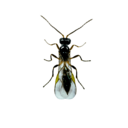
General The fall armyworm is a polyphagous pest that is indigenous throughout the Americas. Recently, it has been found in Africa too. The caterpillars of fall armyworms feed on the leaves, stems and
General The beet armyworm (Spodoptera exigua) has become a regular problem for horticulturalists due to its resistance to nearly all insecticides, and its ability to develop on wild vegetation during
General Larvae of the flies Lyprauta cambria, Proceroplatus trinidadensis and Lyprauta chacoensis (family Keroplatidae) have been associated with root damage in potted orchids, especially in greenhous
General The yellow rose aphid , Rhodobium porosum , is probably of North American origin but is now widely distributed in Europe, North Africa, parts of Asia and South America. It attacks plants of th
General The Japanese beetle, Popillia japonica , originates from north-eastern Asia. It was first observed in the US more than 100 years ago. Although not a pest in Japan, extensive turf, and a lack o
General The European corn borer ( Ostrinia nubilali s), is a severe pest of maize and has also been reported to attack apple, strawberries, peppers and other plants. It is present in Europe, North Afr
General Cutworms ( Agrotis spp.) are occurring worldwide. Important species are for instance the black cutworm Agrotis ipsilon and the turnip moth Agrotis segetum . The larvae of these moths usually f
General Click beetles are elongate beetles with a hard exoskeleton, with the head deeply retracted into the thorax. When disturbed they lie on their back feigning death and then suddenly propel themse
General The chafers are beetles of the Scarabaeidae family. The larvae of both species live in the soil and feed on the roots of many plants. They are a serious pest that can cause substantial damage.
General Since the start of its invasion in 2008/2009, the spotted wing drosophila, which is originally from Asia, has spread extensively in North and South America and Europe where it has caused sever