Two-spotted spider mite ( Tetranychus urticae ) and other Tetranychus spp., except Tetranychus evansi . Mode of action Predatory mites multiply in the sachet and disperse into the crop over a period o
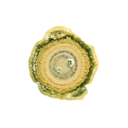
Control whitefly with entomopathogenic fungi Whitefly is a common pest that can cause significant damage to crops and plants. An effective method for controlling whiteflies is through the use of entom
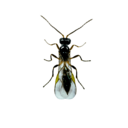
Whitefly control with the parasitic wasp Eretmocerus eremicus Eretmocerus eremicus is a small parasitic wasp belonging to the family Aphelinidae . This beneficial insect is used as an important biolog
Whitefly control with the parasitic wasp Encarsia formosa Encarsia formosa is a parasitic wasp belonging to the family Aphelinidae , widely recognized for its role in biological control, particularly
Leaf miner control with the parasitic wasp Diglyphus isaea Diglyphus isaea is a small parasitic wasp belonging to the family Eulophidae within the order Hymenoptera . It is widely recognized for its r
Use Nutari as an alternative source of food for build-up and maintenance of generalist predatory mite populations ( Amblyseius swirskii , Amblyseius andersoni , Amblydromalus limonicus , Neoseiulus ca
Aphid control with the parasitic wasp Aphidius matricariae Aphidius matricariae is a parasitic wasp belonging to the family Braconidae and is widely recognized for its role in biological pest control
Air Blowers to distribute and apply beneficials Blowing systems Koppert's blowing systems are especially developed for effective and efficient distribution of natural enemies. This uniform distributio
Control caterpillars with beneficial nematodes Beneficial nematodes or entomopathogenic nematodes are mainly known for the biological control of soil pests such as thrips pupae, and larvae of sciarid
Pests Young larvae of various thrips species. Also has an effect on eggs and larvae of whitefly , all stages of non-webbing spider mites (e.g. European red mite , Panonychus ulmi ) and rust mites. Cro