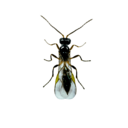
What is apple blossom weevil? The apple blossom weevil (Anthonomus pomorum) is an important early-season pest of apple orchards. Adult weevils emerge before flowering and feed on developing buds befor
What is green apple aphid? The green apple aphid (Aphis pomi) is a common aphid species in apple orchards. Both nymphs and adults feed on young leaves and shoots, reducing tree vigor and affecting sho
Coleobug is an efficient predatory beetle that feeds on a wide range of prey such as aphids . It also consumes pollen and nectar, allowing it to survive in the absence of prey and remain in the crop u
Recommended for you Plant Pests
General Stable flies belong to the genus Stomoxys , Latin for “sharp mouth”; a fitting moniker, as these flies are the only members of the Muscidae family that feed on mammalian blood (particularly ca
General The genus Fannia comprises almost 300 different species of fly, including the lesser house fly , the latrine fly and a whole host of other manure-breeding flies . Fannia species can be found w
General Houseflies are a well-known pest of farm and home. Believed to have originated in central Asia, the insect expanded its range worldwide long ago as a commensal organism to human populations; t
General The rice root aphid (Rhopalosiphum rufiabdominale) is a well-known pest in North America that survives outdoors all year round. It can affect plants grown in both soil and hydroponic systems.
General Although it was first described in 1860, the cannabis aphid ( Phorodon cannabis ; a.k.a. bhang aphid or hemp aphid) is a very new pest to North America. It was first seen on cuttings originati
General Shore flies of the genus Scatella are a common greenhouse pest found throughout the United States, Canada and northern Mexico. In Europe and Asia, the species Scatella stagnalis occurs widely.