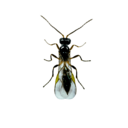
General The lygus bug (or tarnished plant bug) is native to North America, and it is especially common across the eastern half of the continent, from northern Canada to southern Mexico. It is one of t
General The western corn rootworm ( Diabrotica virgifera virgifera ) is a chrysomelid beetle originating from North America, where it is regarded as the main pest of maize. Nowadays it is present in m
General The fall armyworm is a polyphagous pest that is indigenous throughout the Americas. Recently, it has been found in Africa too. The caterpillars of fall armyworms feed on the leaves, stems and
General The yellow rose aphid , Rhodobium porosum , is probably of North American origin but is now widely distributed in Europe, North Africa, parts of Asia and South America. It attacks plants of th
General The diamond back moth (Plutella xylostella) belongs to the family of Plutellidae . It only attacks Brassicaceae species, including cruciferous weeds. The diamond back moth (Plutella xylostella
General Pseudococcus longispinus occurs naturally in tropical and sub-tropical regions, but these days it is widespread throughout the world. The range of host plants of Pseudococcus longispinus is le
General The tomato russet mite (Aculops lycopersici , also referred to as Vasates lycopersici, Vasates destructor and Phyllocoptes destructor in older publications) belongs to the family Eriophyidae.
Overview May beetles are beetles from the Scarabaeidae family, and are plant-eating species from the Melolonthinae subfamily. Although this subfamily contains a number of species which cause damage to
General The shallot aphid, Myzus ascalonicus , is extremely polyphagous. It feeds on crops such as onions, shallots, strawberries, lettuce, brassicas and potatoes and many ornamentals . The shallot ap
General Trichoplusia is not only a damaging pest in crucifers, their favourite host, it can also be found in crops such as tomato, pepper, some cucurbits, soybean, sesame and cotton. One of the reason