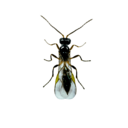
General The chafers are beetles of the Scarabaeidae family. The larvae of both species live in the soil and feed on the roots of many plants. They are a serious pest that can cause substantial damage.
General The larvae of crane flies , called leatherjackets, live in the soil and feed on roots and shoots (which they pull into the ground of mainly grasses and cereal crops. The adults do not cause an
General As the name implies, the European red mite, Panonychus ulmi , is mainly a pest of fruit trees (apple, pear, plum and cherry). However, it can attack a large scale of other woody plants and is
General The black vine weevil, Otiorhynchus sulcatus, is a pest in many ornamental crops (e.g. rhododendron, cyclamen and azalea), as well as in strawberries and other fruit crops in both temperate an
General The potato aphid ( Macrosiphum euphorbiae ) is of North American origin, but is these days distributed throughout the world. It is a highly polyphagous species with a preference for Solanaceae
General The tobacco whitefly ( Bemisia tabaci ) belongs to the family Aleyrodidae , and the sub-family Aleyrodinae . This insect was first identified on tobacco in Greece in 1889, hence the name tabac
General Impatiens thrips (Echinothrips americanus) is an increasing problem in greenhouse cultivation, having spread to many countries within the last 30 years. The thrips have mostly been able to spr
General Houseflies are a well-known pest of farm and home. Believed to have originated in central Asia, the insect expanded its range worldwide long ago as a commensal organism to human populations; t
General Trichoplusia is not only a damaging pest in crucifers, their favourite host, it can also be found in crops such as tomato, pepper, some cucurbits, soybean, sesame and cotton. One of the reason
General The Japanese beetle, Popillia japonica , originates from north-eastern Asia. It was first observed in the US more than 100 years ago. Although not a pest in Japan, extensive turf, and a lack o