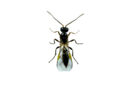
General Pseudococcus longispinus occurs naturally in tropical and sub-tropical regions, but these days it is widespread throughout the world. The range of host plants of Pseudococcus longispinus is le
General The fall armyworm is a polyphagous pest that is indigenous throughout the Americas. Recently, it has been found in Africa too. The caterpillars of fall armyworms feed on the leaves, stems and
General Shore flies ( Scatella tenuicosta ) occur very commonly, often in the vicinity of water. They feed on algae. Other shore fly species have diverse feeding habits but the larvae of most species
General Sciarid flies constitute the family of Sciaridae. The species that cause most damage to crops belong to the genera Bradysia and Lycoriella . Lycoriella species are mainly found in commercial m
General The beet armyworm (Spodoptera exigua) has become a regular problem for horticulturalists due to its resistance to nearly all insecticides, and its ability to develop on wild vegetation during
General The cotton aphid ( Aphis gossypii ) is an extremely polyphagous aphid found on more than 700 plant species. Crop plants attacked by this aphid include cotton, citrus, coffee, cocoa, eggplant,
General The glasshouse potato aphid ( Aulacorthum solani) is a native European species of aphids , seriously affecting crops of sweet pepper in particular. These aphids further affect ornamental crops
General The rose aphid, Macrosiphum rosae , is a serious and often abundant pest of roses. It is virtually cosmopolitan and widely spread in Europe. Damage symptoms Infestations with rose aphids retar
General The shallot aphid, Myzus ascalonicus , is extremely polyphagous. It feeds on crops such as onions, shallots, strawberries, lettuce, brassicas and potatoes and many ornamentals . The shallot ap
General The buckthorn- potato aphid , Aphis nasturtii , has a nearly cosmopolitan distribution and is a major pest of potatoes, where it also transmits viruses. It also attacks a large number of other