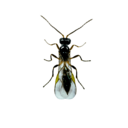
General Larvae of the flies Lyprauta cambria, Proceroplatus trinidadensis and Lyprauta chacoensis (family Keroplatidae) have been associated with root damage in potted orchids, especially in greenhous
General The chafers are beetles of the Scarabaeidae family. The larvae of both species live in the soil and feed on the roots of many plants. They are a serious pest that can cause substantial damage.
General Houseflies are a well-known pest of farm and home. Believed to have originated in central Asia, the insect expanded its range worldwide long ago as a commensal organism to human populations; t
General The brown soft scale Coccus hesperidum is very common in tropical and sub-tropical regions and is also a common pest in greenhouses throughout the world. C. hesperidum has many host plants, in
General The cotton aphid ( Aphis gossypii ) is an extremely polyphagous aphid found on more than 700 plant species. Crop plants attacked by this aphid include cotton, citrus, coffee, cocoa, eggplant,
General The codling moth ( Cydia pomonella ) is a notorious, worldwide pest of apple and also occasionally of pear, quince, peach and other fruits. It is very common in Europe. Damage symptoms After i
General The western flower thrips (Frankliniella occidentalis) is currently the most damaging thrips species in many greenhouse crops. The western flower thrips (Frankliniella occidentalis) can be fou
right type of predatory mite formulation is crucial for effective pest control and cost efficiency in your growing space. By understanding the mechanisms
General The cabbage moth (Mamestra brassicae) is a highly polyphagous defoliator. Besides being a major cabbage pest, it feeds on 70 plants of 22 families, among them crops such as sweet pepper, tomat
General Click beetles are elongate beetles with a hard exoskeleton, with the head deeply retracted into the thorax. When disturbed they lie on their back feigning death and then suddenly propel themse