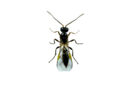
a lesser extent). Although they are extremely common and exist worldwide, it is believed they first originated somewhere in Eurasia. Stable flies superficially [...] before their third-ever feeding (on average, a fly must feed four times before it can oviposit for the first time). After mating the females lay their small
aphid, Macrosiphum rosae , is a serious and often abundant pest of roses. It is virtually cosmopolitan and widely spread in Europe. Damage symptoms In
sustainable pest control and promotes the overall health of strawberry crops, as it encourages growers to minimise the use of synthetic pesticides. Using IPM
species is known for its effectiveness against pests such as wireworms, various caterpillars , and weevil and beetle larvae. Its ability to adapt to different [...] different temperatures makes it a good choice for controlling caterpillars in various crops. Heterorhabditis bacteriophora : These nematodes are particularly
infestation in your greenhouse crop involves several strategies. Firstly, it's important to maintain good plant health through regular irrigation and [...] stressed plants are more susceptible to thrips infestations. Additionally, it's important to make sure thrips cannot enter your greenhouse by using hygienic [...] as regularly cleaning and disinfecting greenhouse surfaces and equipment. It's also important to monitor your crop regularly for signs of thrips, so you
than the margins. Females reproduce parthenogenetically (without mating). It may appear that they bear live young, but in fact the first instar nymph emerges
Preventing spider mites in your crop involves several strategies. Firstly, it is important to maintain good plant health through regular irrigation and [...] cannot enter your greenhouse by implementing hygienic measures. Moreover, it is essential to monitor your crop regularly for signs of spider mites, so
General The shallot aphid, Myzus ascalonicus , is extremely polyphagous. It feeds on crops such as onions, shallots, strawberries, lettuce, brassicas and
Trichoplusia is not only a damaging pest in crucifers, their favourite host, it can also be found in crops such as tomato, pepper, some cucurbits, soybean
Amblydromalus limonicus performs effectively across a wide range of temperatures. It remains active and able to predate and reproduce in both cooler and warmer