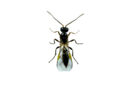
Pests Larvae of various species of thrips (first and second larval stages); Eggs and larvae of greenhouse whitefly ( Trialeurodes vaporariorum ) and cotton whitefly ( Bemisia tabaci ). Crops Do not us
Pests Two-spotted spider mite ( Tetranychus urticae ) and other Tetranychus spp., except Tetranychus evansi . Mode of action Predatory mites use their piercing mouthparts to extract the contents of th
Use Nutari as an alternative source of food for build-up and maintenance of generalist predatory mite populations ( Amblyseius swirskii , Amblyseius andersoni , Amblydromalus limonicus , Neoseiulus ca
Two-spotted spider mite ( Tetranychus urticae ) and other Tetranychus spp., except Tetranychus evansi . Mode of action Predatory mites multiply in the sachet and disperse into the crop over a period o
Pests Young larvae of various thrips species. Also has an effect on eggs and larvae of whitefly , all stages of non-webbing spider mites (e.g. European red mite , Panonychus ulmi ) and rust mites. Cro
information available. SECTION 10: Stability and reactivity Reactivity Biological stability Possibility of hazardous reactions Conditions to avoid Incompatible
Use Nutemia as an alternative source of food for build-up and maintenance of generalist predatory mite populations ( Amblyseius swirskii , Amblyseius andersoni , Amblydromalus limonicus , Neoseiulus c