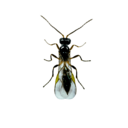
Biological control of beetles Beetles can cause serious damage in many greenhouse and field crops by feeding on leaves, roots, or fruits, leading to reduced growth and yield loss. Effective beetle con
Biological control of aphids Aphids are among the most harmful pests in greenhouse and field crops, causing plant stress, virus transmission and yield loss. Effective aphid control is essential for ma
General Corn rootworms ( Diabrotica sp.) are a devastating pest of cultivated corn in North America, with losses and management expenditures totaling over 1 billion dollars. In Eastern Canada, the nor
Overview May beetles are beetles from the Scarabaeidae family, and are plant-eating species from the Melolonthinae subfamily. Although this subfamily contains a number of species which cause damage to
General The shallot aphid, Myzus ascalonicus , is extremely polyphagous. It feeds on crops such as onions, shallots, strawberries, lettuce, brassicas and potatoes and many ornamentals . The shallot ap
General The buckthorn- potato aphid , Aphis nasturtii , has a nearly cosmopolitan distribution and is a major pest of potatoes, where it also transmits viruses. It also attacks a large number of other
General The mottled arum aphid, Neomyzus circumflexus , has a cosmopolitan distribution and a wide host range. In temperate climates it is primarily a pest in greenhouses where it attacks many ornamen
General The codling moth ( Cydia pomonella ) is a notorious, worldwide pest of apple and also occasionally of pear, quince, peach and other fruits. It is very common in Europe. Damage symptoms After i
General Trichoplusia is not only a damaging pest in crucifers, their favourite host, it can also be found in crops such as tomato, pepper, some cucurbits, soybean, sesame and cotton. One of the reason
Overview The corn earworm is a major pest affecting over 100 crops, of which the most prominent varieties are corn, sorghum, cotton, aubergine, pepper, and tomato. They primarily feed on flowers and f